Autoimmune Diseases: Why Women Are at Greater Risk
- Charithma Peiris

- 12 minutes ago
- 5 min read
In the United States, 15 million individuals have been diagnosed with lifelong autoimmune diseases. A shocking 80% of this burden falls on women [1,2], but why is this the case? The answer likely lies at the intersection of biology and environment, including societal pressures and the immune system.
What are autoimmune diseases?
Autoimmune diseases occur when the immune system mistakenly attacks the body’s own cells [3]. Although the immune system functions to protect the body from foreign substances like bacteria and viruses, it remains over-activated in autoimmune cases. Typically, the body eliminates immune cells that attack its own tissues, but some of these cells may slip through the cracks. Both types of immune cells, those attacking foreign substances and others attacking the body’s cells, are produced, but the checkpoints that eliminate the ones that attack the body’s own may fail. This type of error results in an autoimmune disorder. Some of the explanations as to why women are disproportionately affected lie in the factors that make autoimmune diseases more likely.
Why are they more prevalent in women?

Biologically, female cells have two X chromosomes, one of which is inactivated during early development. This prevents expression of twice the amount of X-linked genes, which would cause a host of problems, including creating variation in the immune system. This inactivation process happens when one of the X chromosomes copies part of its DNA to make Xist (X-inactive specific transcript) RNA, which acts as a blanket that wraps around one of the X chromosomes and forms a landing pad for binding proteins. Silencing proteins bind to the XIST RNA to tightly pack the long strands of DNA, making the DNA inaccessible. This creates the ribonucleic (RNP) complex, which is immunogenic [4].
When something is immunogenic, it means the substance provokes an immune response in the body. Just as viruses and bacteria produce immune responses, this complex is recognized as a foreign body by the immune system after cell death [2]. Cell death and regeneration are normal processes in the body, but when a cell dies, the exposed intracellular contents, like the RNP complex, activate the immune system. Frequent immune system activation due to RNP exposure, alongside genetic and psychological factors, can increase the likelihood of developing an autoimmune condition.
Another aspect that activates an immune response is estrogen. Estrogen is a primary female sex hormone that has many different functions throughout a woman’s life, including playing a role in the immune system. Almost all immune cells have estrogen receptors, which means that these cells act differently depending on how much estrogen is available. There are two types of immune responses: the innate and adaptive immune systems. The first is a fast and general defense against any foreign substance, and the latter is more specific and slow-acting. This adaptive response has two subtypes called the cell-mediated immune response and the humoral immune response [5]. Estrogen suppresses the cell-mediated response, which uses attacker cells and chemicals to destroy foreign threats, and this process is suppressed by estrogen because it’s costly for the body compared to the humoral response. Meanwhile, the humoral immune response that creates antibodies against bacteria, viruses, and anything outside of cells is enhanced by estrogen [6]. This may make sense from an evolutionary perspective. During pregnancy, the father’s genes in the fetus are recognized as foreign. However, the elevated levels of estrogen during pregnancy prevent direct attack on those cells and subsequent damage to the fetus. Meanwhile, the estrogen also increases the production of antibodies to still ensure that the mother and the fetus remain protected against illness. However, women experience hormonal fluctuations throughout their entire life, and the enhanced humoral immune response during estrogen spikes can also result in antibodies remaining in the body for too long. This constant antibody production may attack the body’s own cells [6].
Why does cell death occur?
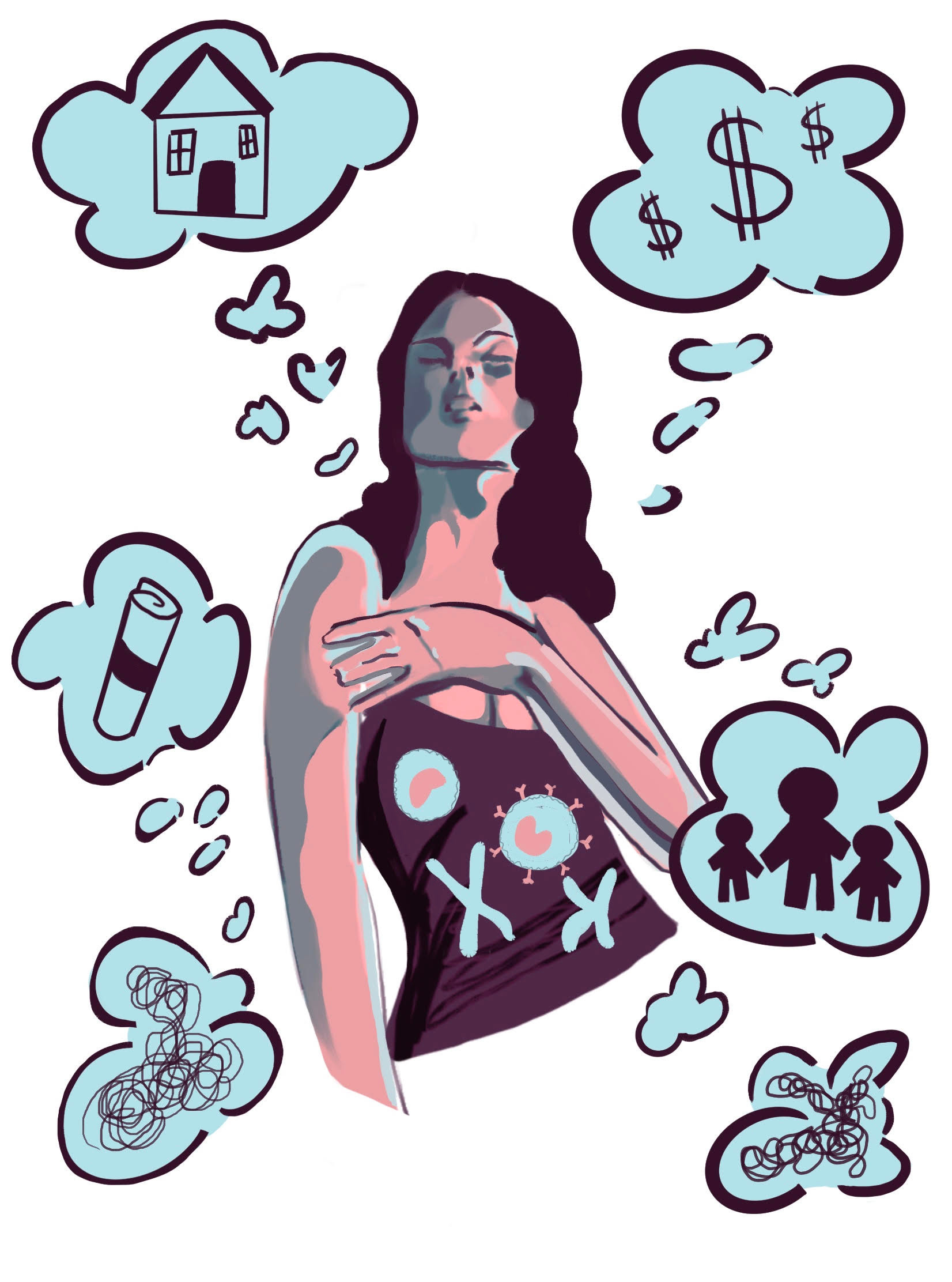
Cell death is a normal process, but it occurs more frequently with physical injuries, viral or bacterial infections, chronic inflammation, and even chronic stress. Inflammation is the immune system's response to a threat. When this persists for a long time, known as chronic inflammation, the immune system gets tired, and the released cytokines, histamines, and attacker cells start fighting healthy cells. This causes excess cell death, leading to damaged blood vessels and nearby organs. Temporary inflammation of the gut is particularly common and occurs when there is an imbalance of microorganisms that make up the gut microbiome. If this imbalance lingers for too long, it creates “leaks” for bacteria and other components to escape through, triggering the immune system and cycling back to chronic inflammation [7]. The immune system can also become overactive with chronic stress, as this state leads to increased cell death throughout the body. The hypothalamic-pituitary-adrenal (HPA) axis is how cortisol, the primary stress hormone, is released in response to stress. When this stress stays for a long period of time, it creates a cycle of producing excess cortisol called HPA axis dysfunction. Normally, cortisol dampens the immune system, but when its production becomes constant, the body is left in a perpetually inflamed state [8].
What can you do?
Autoimmunity does not come from genetics alone. It’s an interaction between genes and environmental factors such as chronic stress that lead to immune dysregulation. While genetic and immune factors may be out of your control, you can alter your environment to reduce your chances of autoimmunity. Women experience immense societal pressures– beyond facing criticism across nearly every aspect of their lives, women are also expected to take on caregiving responsibilities alongside their own responsibilities. This pressure to balance all these tasks and responsibilities eventually leads to chronic stress. Stress can be managed through the support of peers, family, and especially through mental health counselling. Learning about yourself, your stressors, and how to manage them is something very beneficial coming out of therapy.
References
Abend AH, He I, Bahroos N, Christianakis S, Crew AB, Wise LM, et al. Estimation of prevalence of autoimmune diseases in the United States using electronic health record data. J Clin Invest. 2025;135(4).
Dou DR, Zhao Y, Belk JA, Zhao Y, Casey KM, Chen DC, et al. Xist ribonucleoproteins promote female sex-biased autoimmunity. Cell. 2024;187(3):733-49.
Cleveland Clinic. Autoimmune diseases [Internet]. Cleveland: Cleveland Clinic; 2023 Oct 22 [cited 2026 Aug 2]. Available from: https://my.clevelandclinic.org/health/diseases/21624-autoimmune-diseases
Brockdorff N, Ashworth A, Kay G, et al. Conservation of position and exclusive expression of mouse Xist from the inactive X chromosome. Nature. 1991;351:329-31.
Kuemerle B. Development and Physiology: The Biology of You. San Diego: Cognella Academic Publishing; 2018.
Foo YZ, Nakagawa S, Rhodes G, Simmons LW. The effects of sex hormones on immune function: a meta-analysis. Biol Rev. 2017;92(2):551-71.
Mu Q, Kirby J, Reilly CM and Luo XM. Leaky Gut As a Danger Signal for Autoimmune Diseases. Front. 2017. Immunol. 8:598. doi: 10.3389/fimmu.2017.00598
Ring M. An integrative approach to HPA axis dysfunction: from recognition to recovery. Am J Med. 2025.


Comments